


Epidural Steroid Injections - Efficacy in Older Adults
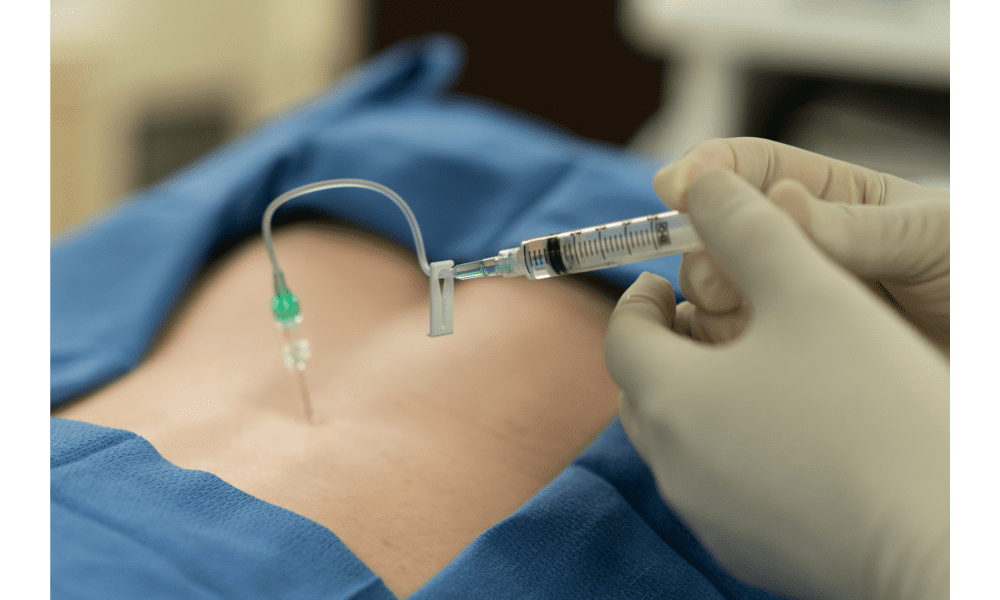
There is limited research on the long-term effectiveness of epidural steroid injections (ESI) in older adults despite the high prevalence of back and leg pain in this age group. We tested the hypothesis that older adults undergoing ESI compared with patients not receiving ESI: have worse pain, disability, and quality of life (“outcomes”) before ESI, have improved outcomes after ESI, and have improved outcomes due to a specific effect of ESI.
Methods
We prospectively studied patients aged ≥65 years who presented to primary care with new episodes of back pain in three US health systems (BOLD registry). Outcomes were leg and back pain intensity, disability, and quality of life, assessed at baseline and at 3, 6, 12, and 24 months of follow-up. We categorized participants as: ESI within 6 months of the index visit (n = 295);ESI within 6 months (n = 4809); no ESI within 6 months, propensity-score matched group 1 (n = 483). We analyzed the data using linear regression and Generalized Estimating Equations.
Result
Pain intensity, disability, and quality of life at baseline were significantly worse at baseline in patients with ESI (group 1) than in group 2. Improvements from baseline to 24 months in all outcomes were statistically significant for group 1. However, no statistically significant differences were observed between output trajectories for groups 1 and 3 with matched propensity scores.
Conclusions
Older adults treated with ESIs experience long-term improvement. However, the improvement is unlikely to be the result of a specific ESI effect.
Common Factors that May Affect the Success of the Injection
The effectiveness of an epidural depends on many factors, including:
-
Underlying condition: This injection treatment is usually more effective in managing low back pain with radiating leg pain or sciatica than low back pain alone. While the injection can also be used to treat non-radicular, localized back pain in Richardson, the effectiveness can be low.
-
Submission route: Research shows that the transforaminal and interlaminar route can obtain more effective results compared to the caudal route.
-
Type of steroid:Poorly soluble or particulate steroids such as methylprednisolone or triamcinolone have a long duration of action. Water-soluble or nonparticulate steroids such as dexamethasone are considered safer than particulate steroids, but they tend to be short-lived.
The injection can sometimes be used in combination with a comprehensive rehabilitation program to increase the likelihood of longer-term pain relief and return to daily activities.
Other factors that may affect the outcome of this treatment include the skill and experience of the physician administering the injection, the use of guided fluoroscopy, and the general health of the patient. The treatment may also be more effective in treating acute pain (versus chronic symptoms).
Importance
In this large, two-year, prospective study of older adults with new episode fusion low back pain, back pain, leg pain, disability, and improvement in quality of life after epidural steroid injections; however, propensity score comparisons revealed that the improvement was unlikely due to a specific effect of the injections, suggesting that epidural steroids are unlikely to provide long-term benefits in older adults with new episodes of back and leg pain.
FAQs
1. Are epidural steroid injections effective for older adults?
Epidural steroid injections can help reduce back and leg pain in older adults, especially in the short term. However, studies show that long-term improvement may not always be due to the injection itself, and results vary depending on the condition being treated.
2. How long do epidural steroid injections last?
Pain relief from epidural steroid injections may last from a few weeks to several months. Some patients experience longer relief when injections are combined with physical therapy or rehabilitation programs.
3. What conditions are treated with epidural steroid injections?
Epidural steroid injections are commonly used for sciatica, herniated disc, spinal stenosis, and nerve-related back pain. They are usually more effective for leg pain with nerve irritation than for simple low back pain alone.
4. Are epidural injections safe for seniors?
Epidural steroid injections are generally safe for older adults when performed by an experienced pain management doctor. The doctor may use imaging guidance to improve accuracy and reduce risks.
5. Why do some patients not get long-term relief from epidural injections?
The success of an epidural injection depends on the cause of pain, the type of steroid used, the injection technique, and the overall health of the patient. Chronic conditions may not respond as well as acute pain.
6. Which type of epidural injection works best?
Transforaminal and interlaminar epidural injections often provide better results than caudal injections. The best method depends on the patient’s condition and should be decided by a pain specialist in Dallas.
7. Do epidural steroid injections cure back pain?
Epidural injections do not cure the underlying problem but help reduce inflammation and nerve irritation. They are often used as part of a complete pain management plan that may include therapy, medication, or other treatments.
8. Can epidural injections help with sciatica in older adults?
Yes, epidural steroid injections are commonly used to treat sciatica and radiating leg pain. Patients with nerve-related pain often respond better than those with only localized back pain.

 English
 French
 Spanish
 Portuguese
 Deutsch
 Turkish
 Dutch
Dutch
 Italiano
 Russian
 Romaian
 Portuguese (Brazil)
 Greek
Greek
